There is something exciting about walking into a brand-new home. Everything is fresh, untouched and chosen by you. But new does not always mean better.Here are 10 reasons why a previously
Dated: February 9 2026
Views: 140
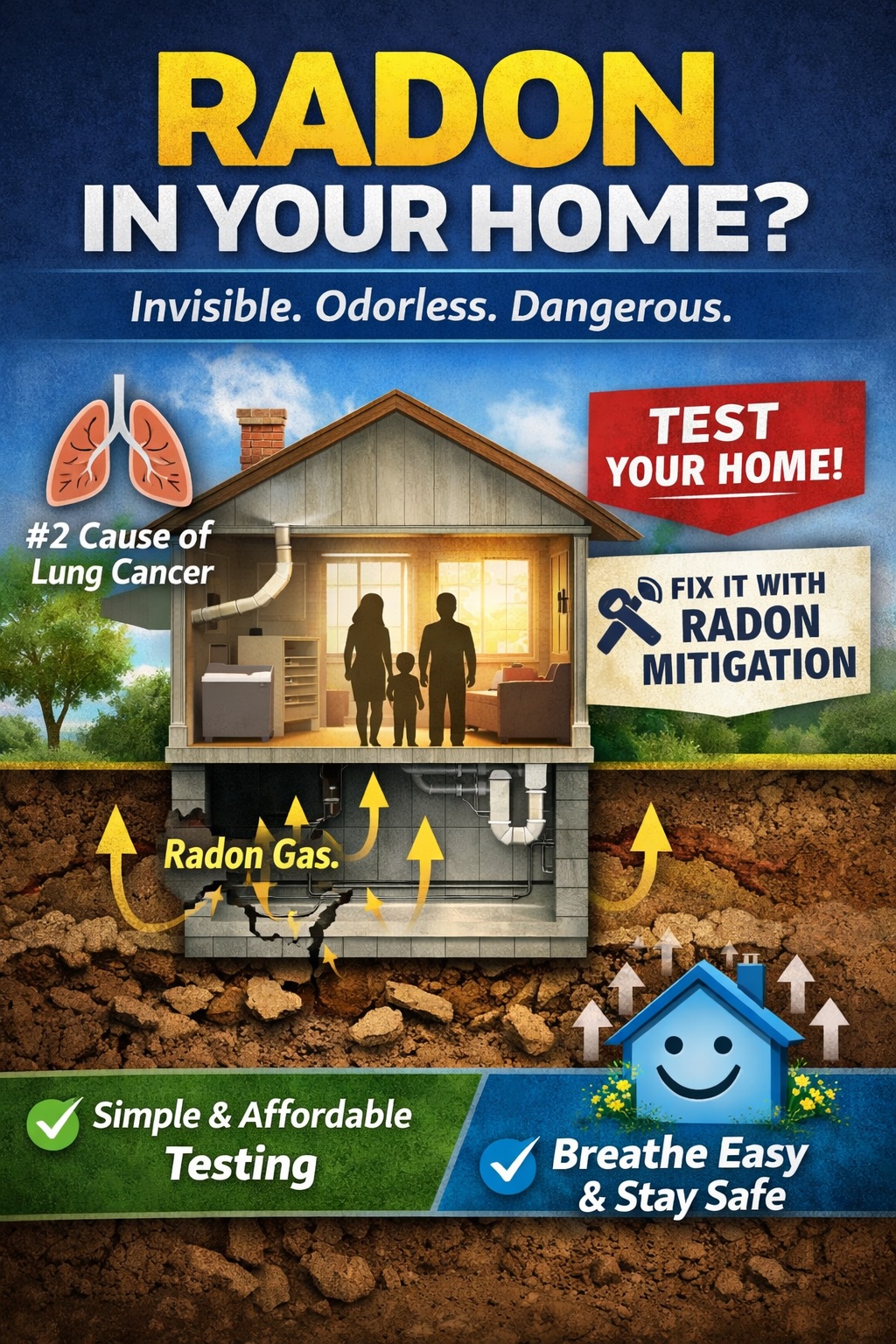
When it comes to indoor air quality, most homeowners think about dust, mold, or allergens. But there’s another invisible threat that often goes unnoticed: radon. You can’t see it, smell it, or taste it — yet radon is one of the leading causes of lung cancer. The good news? Testing is simple, and mitigation is highly effective.
Let’s break down what radon is, why it matters, and how you can protect your home and family.
Radon is a naturally occurring radioactive gas that forms when uranium breaks down in soil, rock, and groundwater. It’s found all over the country and can seep into homes through:
Cracks in foundations or basement floors
Gaps around pipes and sump pumps
Crawl spaces
Well water (in some cases)
Once radon enters a home, it can become trapped and build up to unsafe levels — especially in lower levels like basements.
Radon exposure is the second leading cause of lung cancer, after smoking. According to the EPA, radon is responsible for tens of thousands of lung cancer deaths each year.
Key things to know:
Radon affects smokers and non-smokers
Long-term exposure increases risk
Children may be at higher risk due to longer lifetime exposure
Because radon is invisible and odorless, testing is the only way to know if your home has elevated levels.
Testing your home for radon is straightforward and affordable. There are two main options:
Usually last 2–7 days
Good for an initial screening
Often used during real estate transactions
Run for 90 days or more
Provide a more accurate year-round average
Ideal for long-term homeowners
Tests can be purchased online or through home improvement stores, or you can hire a certified radon professional to conduct testing for you.
Radon is measured in picocuries per liter (pCi/L)
The EPA recommends action if levels are 4.0 pCi/L or higher
Even levels between 2.0–4.0 pCi/L may still pose a risk
If testing shows elevated radon levels, don’t panic — radon mitigation works.
The most common solution is a sub-slab depressurization system, which:
Uses a vent pipe and fan to pull radon from beneath the home
Safely releases gas above the roofline
Prevents radon from entering living spaces
These systems:
Are highly effective (often reducing levels by up to 99%)
Can be installed in most homes
Typically operate quietly and continuously
In some cases, additional sealing of foundation cracks or crawl space encapsulation may be recommended.
You should test your home:
When buying or selling a home
After renovations, especially basement or foundation work
Every few years, even if previous results were low
If you’ve never tested before
Radon levels can change over time due to soil conditions, weather, and home modifications.
Radon may be invisible, but it doesn’t have to be a mystery. Testing is simple, affordable, and one of the easiest steps you can take to protect your family’s health. If high levels are found, professional mitigation can dramatically reduce your risk and give you peace of mind.
Your home should be a safe place to breathe — and radon testing helps ensure it stays that way.
📞 Let’s chat!
I’m always happy to help you make the most of living — and loving — Ottawa. ❤️🏡
Krista McFadden
REALTOR® | RE/MAX Hallmark Realty Group
Ottawa, ON
📱 https://www.instagram.com/kristasells.realestate

Krista McFadden redefines the Real Estate experience with a commitment to customer service, a client-first approach and unwavering dedication to achieving your goals. Whether you're a first-time homeb....
There is something exciting about walking into a brand-new home. Everything is fresh, untouched and chosen by you. But new does not always mean better.Here are 10 reasons why a previously
Buying a home is one of the biggest financial decisions you'll make. Most buyers focus on the purchase price, down payment, and monthly mortgage payment. Those are important, but they're only part
Buying or selling a home is already an emotional process—and then the home inspection report arrives. Suddenly, you’re staring at a long list of items, some minor, some more serious, and
Spring is one of the busiest and most competitive seasons in the Ottawa real estate market. As snow melts and natural light returns, buyers become more active—and more selective. That means

The listing data displayed is deemed reliable but is not guaranteed accurate by CREA®. Data last updated on September 23, 2026 8:07 PM UTC The trademarks REALTOR®, REALTORS®; and the REALTOR® logo are controlled by The Canadian Real Estate Association (CREA®) and identify real estate professionals who are members of CREA®. Used under license. The trademarks MLS®, Multiple Listing Service® and the associated logos are owned by The Canadian Real Estate Association (CREA®) and identify the quality of services provided by real estate professionals who are members of CREA®. Used under license.
Show More...