There is something exciting about walking into a brand-new home. Everything is fresh, untouched and chosen by you. But new does not always mean better.Here are 10 reasons why a previously
Dated: January 20 2026
Views: 369
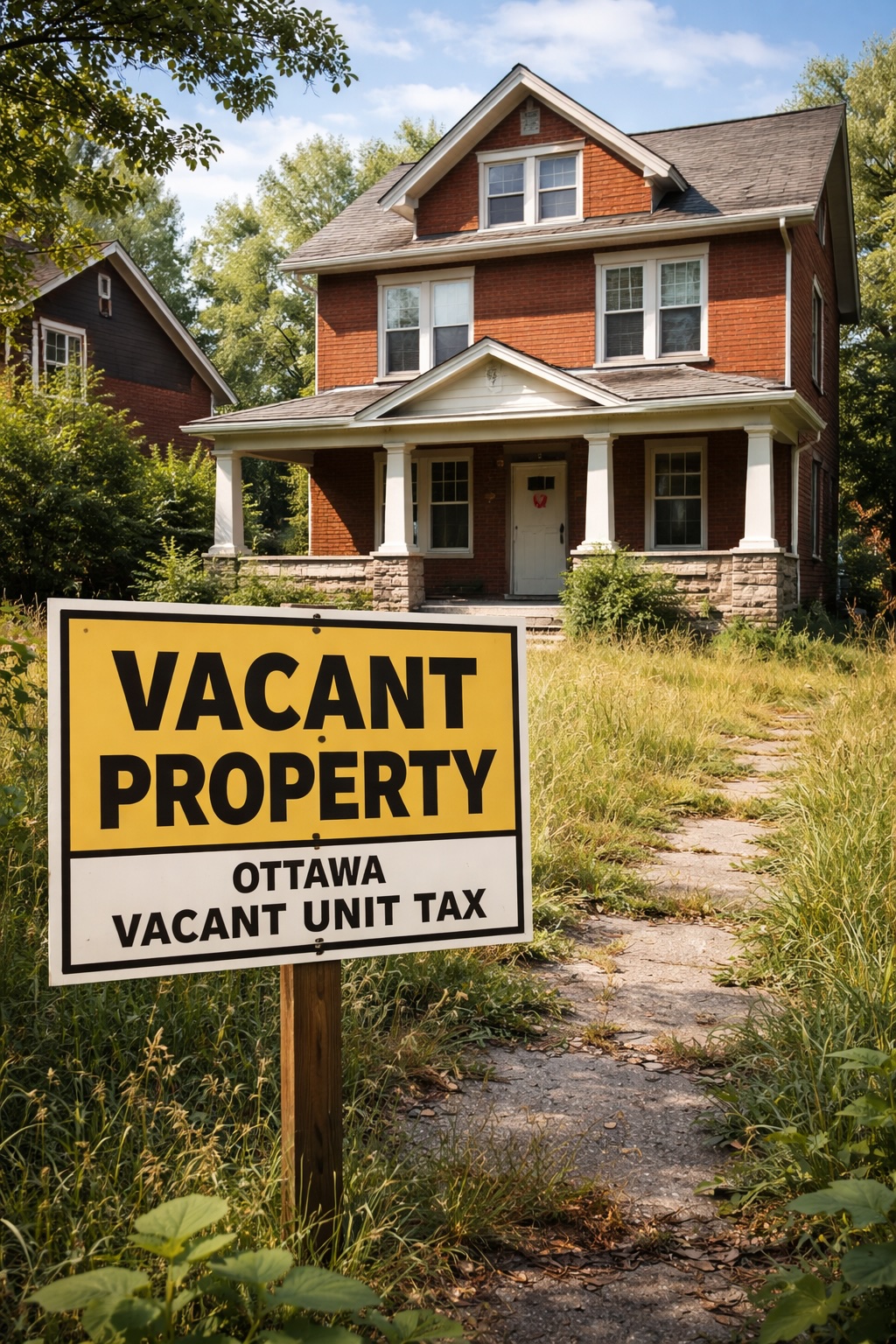
The Vacant Unit Tax (VUT) is an annual tax that applies to residential properties in Ottawa that remain vacant for more than 184 days (about six months) in a calendar year. The tax is calculated as a percentage of the property’s assessed value, and if it applies to a unit, it is added to the property’s regular tax bill.
The City’s goal with the tax is to encourage property owners to occupy or rent out unused homes, thereby expanding the housing supply and supporting more stable rental and purchase markets.
Every residential property owner in Ottawa — even if the property is not vacant — must submit a yearly declaration reporting whether the property was occupied or vacant during the previous year. A declaration must be submitted for each property owned.
Failing to submit a declaration by the deadline means the property will be automatically deemed vacant and subject to the VUT.
Here are the key points of how the Vacant Unit Tax is applied:
Vacancy Threshold: A property is considered vacant if it was unoccupied for more than 184 days in the previous calendar year.
Tax Rate: The initial VUT rate is 1% of the property’s assessed value. This tax is added to the final property tax bill due in June.
Occupancy Types: Properties are not charged the VUT if they were used as a principal residence, occupied by tenants, or meet other qualifying exemptions.
Consecutive Vacancies: If a property remains vacant for multiple years in a row, the tax rate increases by 1% for each additional year, up to a maximum of 5% of assessed value.
While all residential property owners must file a declaration, many properties won’t owe the tax if they fall into specific categories:
✔ Principal Residence — even if the owner was away for part of the year.
✔ Occupied by Tenants — rented for at least 184 days in total during the year.
✔ Properties with Exemptions — such as units under major renovation or circumstances that meet other by-law criteria.
If a property owner believes it qualifies for an exemption, they must still provide details on their declaration to support that claim.
The VUT declaration period typically opens early in the new year and must be submitted by the interim tax due date, usually around March. Late declarations are still accepted up to April 30 but carry a $250 late fee.
If no declaration is received by the late deadline, the City will deem the property vacant and apply the tax. In some cases, providing false information can result in fines up to $10,000.
Property owners can complete their VUT declaration online through the City’s website using their roll number and access code. Alternatively, declarations can be filed through the MyServiceOttawa account, over the phone, or in person at a City Service Centre.
By incentivizing owners to rent or occupy vacant homes, the VUT helps increase available housing stock and supports the City’s broader housing strategy. Revenue collected from this tax is invested into affordable housing initiatives, further reinforcing Ottawa’s commitment to tackling housing challenges.
The Vacant Unit Tax is an important policy tool for both homeowners and the housing market in Ottawa. Whether you own a condo, a single-family home, or multiple properties, understanding your responsibilities and deadlines under this program is crucial — not only to avoid penalties but also to contribute positively to the city’s housing goals.
For more detailed information or to complete your declaration, visit the City of Ottawa’s official Vacant Unit Tax page at Ottawa.ca/vut.
📞 Let’s chat!
I’m always happy to help you make the most of living — and loving — Ottawa. ❤️🏡
Krista McFadden
REALTOR® | RE/MAX Hallmark Realty Group
Ottawa, ON
📱 https://www.instagram.com/kristasells.realestate

Krista McFadden redefines the Real Estate experience with a commitment to customer service, a client-first approach and unwavering dedication to achieving your goals. Whether you're a first-time homeb....
There is something exciting about walking into a brand-new home. Everything is fresh, untouched and chosen by you. But new does not always mean better.Here are 10 reasons why a previously
Buying a home is one of the biggest financial decisions you'll make. Most buyers focus on the purchase price, down payment, and monthly mortgage payment. Those are important, but they're only part
Buying or selling a home is already an emotional process—and then the home inspection report arrives. Suddenly, you’re staring at a long list of items, some minor, some more serious, and
Spring is one of the busiest and most competitive seasons in the Ottawa real estate market. As snow melts and natural light returns, buyers become more active—and more selective. That means

The listing data displayed is deemed reliable but is not guaranteed accurate by CREA®. Data last updated on September 23, 2026 8:07 PM UTC The trademarks REALTOR®, REALTORS®; and the REALTOR® logo are controlled by The Canadian Real Estate Association (CREA®) and identify real estate professionals who are members of CREA®. Used under license. The trademarks MLS®, Multiple Listing Service® and the associated logos are owned by The Canadian Real Estate Association (CREA®) and identify the quality of services provided by real estate professionals who are members of CREA®. Used under license.
Show More...